
Why maternal hospital beds are too high | Couplet Care

All insights

The maternal hospital bed is too high
Hospital beds are expected to be kept at the lowest and safest position except when they need to be adjusted. For postpartum patients, many of whom are recovering from major abdominal surgery, managing pain with medication, and operating on little sleep, maintaining that low bed position is protective for their safety.
And yet, on postpartum units across the country, nurses are walking into rooms and finding beds raised too high. Why might this be?
There are reasons
Many mothers raise their hospital beds in an effort to better reach their infants. Traditional bassinets next to the maternal bed were designed back when nursery care of infants was typical. A standing adult would reach into bassinets to lift babies up. Now, outdated bassinets are often used during postpartum rooming-in.
Traditional bassinets were not designed for postpartum bedside use. Traditional bassinet walls are fixed and high. Their structure was never intended to accommodate a mother sitting in a hospital bed, twisting and learning trying to reach her newborn. This pain point is especially problematic after birth by cesarean section or when a mother has a disability.
When a new mother in the hospital cannot reach her infant, she has limited options. She can call for nursing help. She can offer soothing words to her infant while they wait. A mother may also raise her bed up in an attempt to reach into the bassinet as best she can. Then, once she has her baby - she might then fall asleep with the infant in her arms because it hurts so much to move in these ways. The access barriers create unnecessary risks.
The risks that follow
A hospital bed raised too high is avoidable. The clinical implications are real.
Postpartum patients are at risk for in-hospital falls. Pain, limited mobility, medication use, and limited sleep can all affect maternal balance and coordination. A bed at elevated height does significantly increase the consequences of a fall for the mother or her infant.
These are interconnected safety events driven by bassinets.
What happens when a mother has easy access to her infant
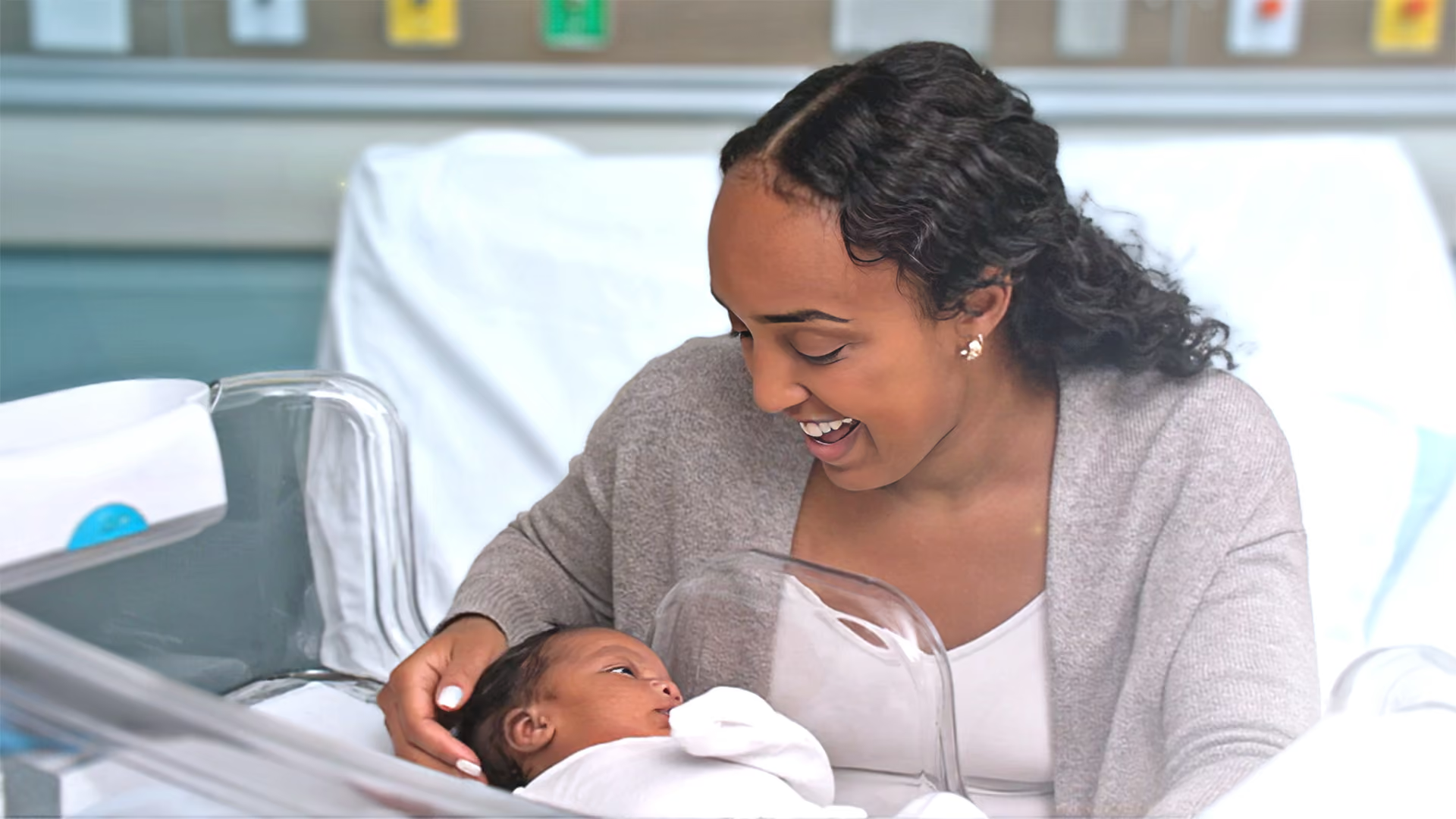
When a mother has easy access to her infant from bed, her bed can stay in a low position. This arrangement is safer.
The Couplet Care Bassinet positions alongside the maternal bed, with a removable sidewall and height controls accessible to a mother in a seated or reclined position. She does not need to raise her bed to reach her infant. She does not need to lean, twist, or call for assistance for routine infant care. The infant is reachable, safely, from the bed position the clinical environment requires her to maintain. She can pick up her baby and set them down as she needs and likes, which is critical for safe infant sleep and her own recovery.
Patient safety is a priority
Patient safety is a priority and the pattern described here warrants attention because it is an issue for each family, around the clock. The gap in support created by use of traditional bassinets influences both maternal and infant safety.
Traditional bassinets require patients to create workarounds. These strategies carry risk. We can promote patient safety through establishing more appropriate built environments for new families to be safe and well.
The Couplet Care Bassinet has been co-designed to meet needs within the context of postpartum hospital rooms. For clinical inquiries or to request a demonstration, complete our contact form.
Discover the innovative Couplet System of Care
Explore the bassinet designed to connect families safely, promote bonding, and provide exceptional support for parents, infants, and clinical staff.